Female Cyclicity reminds us that we do not function in a straight line; we have phases with their own rhythms: menstruation, pre-ovulation, ovulation, and post-ovulation. These phases ask us for different forms of energy and rest. And when the cycle changes, as in perimenopause or menopause, that rhythm is not lost; it expresses itself in another way.
Integrating cyclicity is not just a cultural label; it is combining physiological knowledge with practices that respect your own rhythm. Understanding what happens in each phase (hormones, energy, and emotional tendencies) allows you to design days and rituals that accompany you and stop demanding of yourself just when your body asks for rest.
Here I will accompany you with practical proposals to listen to your own rhythm and thus organize your day-to-day life: work, creativity, leisure, sports, and self-care, in a more conscious and respectful way with yourself, whether you are in your menstrual cycle or in a new life stage.
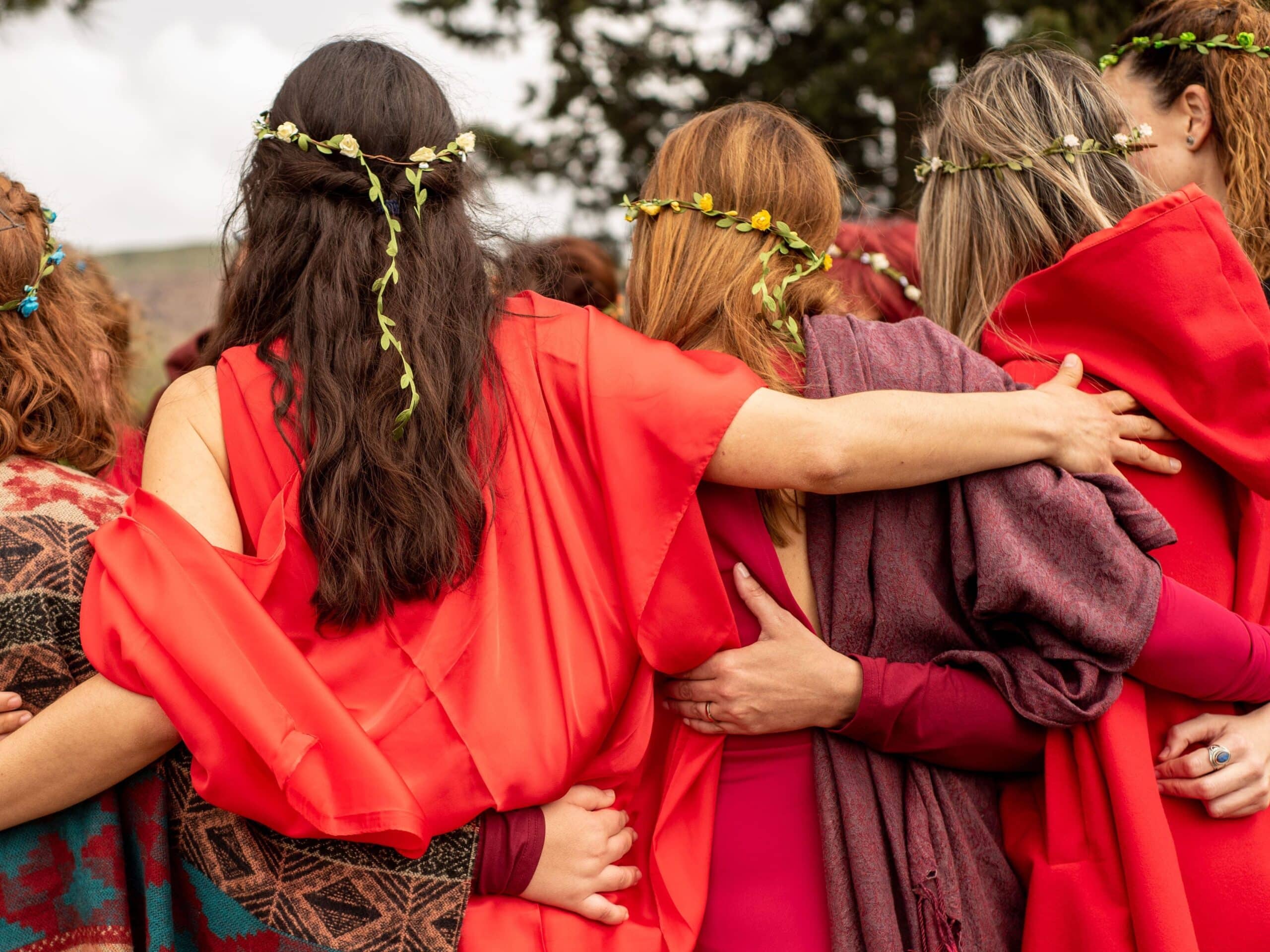
In ancient cultures, menstruation and its rhythms were celebrated as part of a great life cycle that united women, the moon, and the earth. The phases of the cycle: menstruation, pre-ovulation, ovulation, and post-ovulation were lived as moments of introspection, creativity, action, and rest, always respecting the natural pulse of the body.
Over time, our society adopted linear calendars and routines that ignored these internal oscillations. The result was that many of us stopped attending to our physical and emotional changes, adapting to a single rhythm that does not match our own energies, our feminine pulse.
By recognizing these four “inner seasons,” each of us can synchronize our daily activities (work, relationships, creativity, self-care…) with what our body asks for at each moment. This melody offers a personal map, different from the world clock, which helps us make more fluid and satisfying decisions.
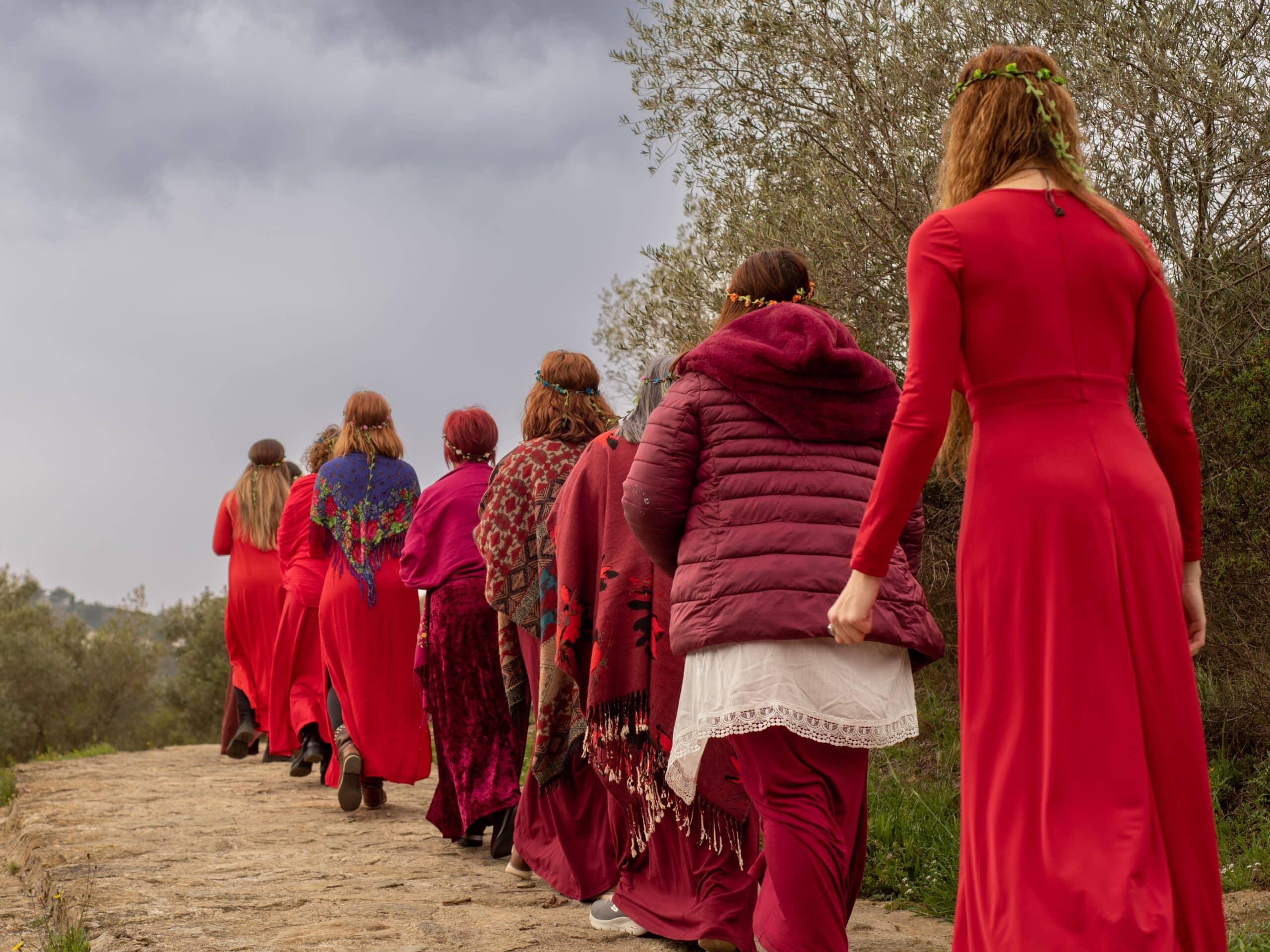
This approach is not a trend: it is a return to a way of being in the world that honors the natural alternation of activity and rest. When we integrate cyclicity into our routine, we stop fighting against our own natural changes and learn to use them; for example, we take advantage of the clarity of pre-ovulation to plan, the vitality of ovulation to act, the reflection of post-ovulation to refine details, and the stillness of menstruation to recharge.
Discovering and respecting that inner rhythm awakens a more harmonious way of living, because it is not about “enhancing” or “empowering” but about attending to, understanding, and accompanying each phase with conscious attention. Thus, each month becomes an opportunity to know ourselves better, to flow with our own rhythm, and to inhabit the world from a renewed, balanced, and authentic perspective.
“Flow and Rest: The Art of Respecting Your Own Rhythms”